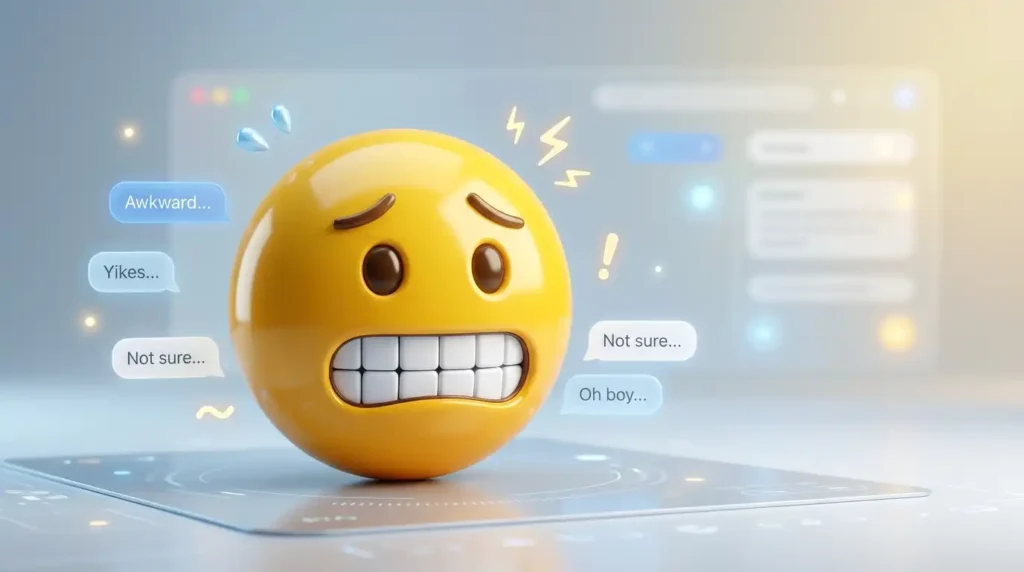

That awkward moment when you do not know whether to laugh, cringe, or just stay quiet that is where the grimace face emoji 😬 often fits.
It can show nervousness, embarrassment, awkwardness, tension, or an uncomfortable reaction. But context matters. The same emoji can feel funny in one message and worried in another.
If you searched for the grimace face emoji meaning, you probably want to know what 😬 really says, when to use it, and how people use it on WhatsApp, Instagram, and TikTok.
Below, you will find simple meanings, real examples, and copy-paste combinations you can use right away.
The 😬 emoji is the perfect little face for those “uh-oh, this is awkward” moments.
What does grimace face emoji mean?
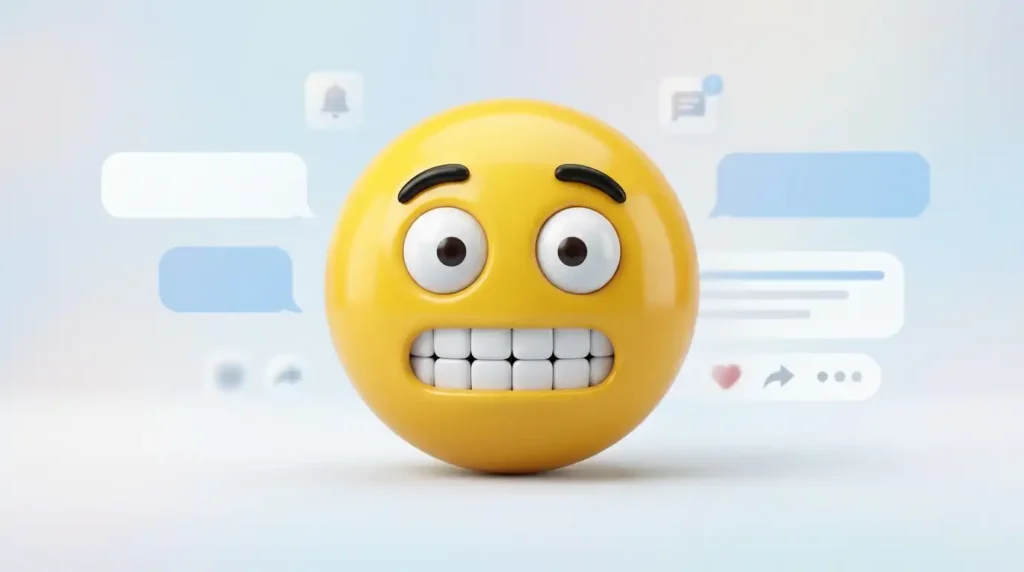
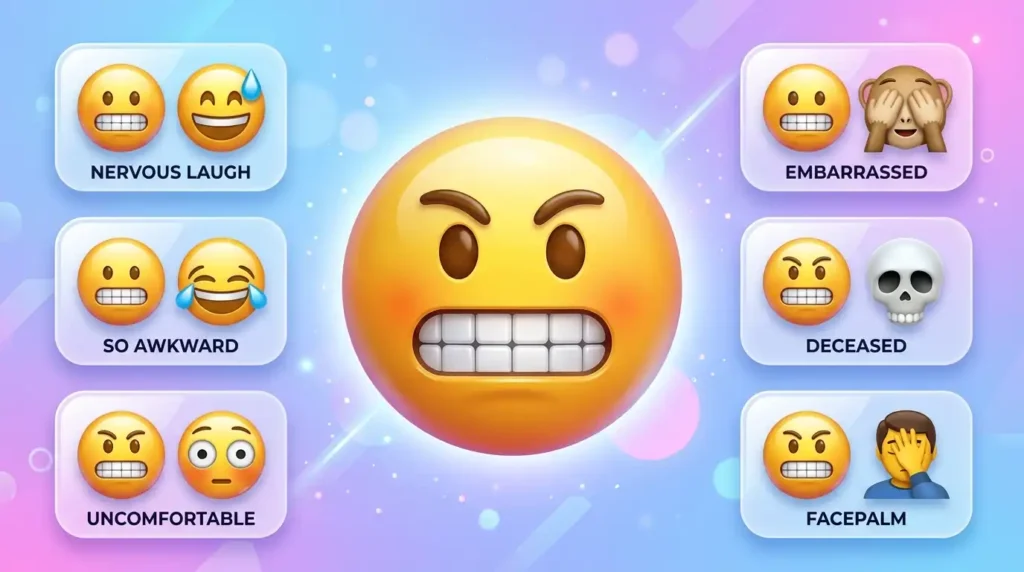
The grimace face emoji 😬 usually shows an uncomfortable, nervous, embarrassed, or awkward feeling. Its meaning can change based on the message around it.
Here are the main emojis in this closely related expression family:
- 😬 Grimacing Face: Awkwardness, nervousness, embarrassment, or tension. It can also soften an uncomfortable statement.
- 😅 Grinning Face with Sweat: Relief after a stressful moment, nervous laughter, or “that was close.”
- 😳 Flushed Face: Surprise, embarrassment, or feeling caught off guard.
- 😐 Neutral Face: A flat or uncertain reaction. It can suggest that someone has little to say.
- 😶 Face Without Mouth: Speechlessness, silence, or not knowing how to respond.
- 🙃 Upside-Down Face: Playful awkwardness, irony, or pretending everything is fine when it is not.
| Emoji | Core meaning | Misread as | Best used when |
| 😬 | Awkward or nervous | Anger | You feel uncomfortable |
| 😅 | Nervous relief | Simple happiness | A stressful moment passes |
| 😳 | Embarrassment | Fear | You feel caught off guard |
| 😐 | Neutral reaction | Rudeness | You have little reaction |
| 😶 | Speechless | Sadness | You do not know what to say |
| 🙃 | Awkward humor | Confusion | You are being ironic |
😬 Grimacing Face
Meaning: Awkwardness, nervousness, or an uncomfortable reaction.
Example 1: I forgot the deadline 😬
Example 2: That was really awkward 😬
😅 Grinning Face with Sweat
Meaning: Nervous relief or laughing through an uncomfortable moment.
Example 1: I almost missed the bus 😅
Example 2: That was close 😅
😳 Flushed Face
Meaning: Embarrassment, surprise, or feeling caught off guard.
Example 1: You actually said that 😳
Example 2: I did not expect this 😳
😐 Neutral Face
Meaning: A flat, calm, or uncertain reaction.
Example 1: Okay… 😐
Example 2: I honestly have no words 😐
😶 Face Without Mouth
Meaning: Silence, speechlessness, or uncertainty about what to say.
Example 1: What am I supposed to say 😶
Example 2: You really did that 😶
🙃 Upside-Down Face
Meaning: Playful awkwardness, irony, or a joking reaction.
Example 1: Everything is totally fine 🙃
Example 2: Well, that went well 🙃
🤔 Thinking Face
Meaning: Thinking, questioning, or uncertainty.
Example 1: Let me think 🤔
Example 2: Are you sure about that? 🤔
Peeking Face
Meaning: Shyness, nervous curiosity, or wanting to look while feeling awkward.
Example 1: I am scared to check
Example 2: What happened next?
Smiling Face with Tear
Meaning: Mixed emotions, emotional acceptance, or smiling through difficulty.
Example 1: I am fine, really
Example 2: That was emotional
Melting Face
Meaning: Feeling overwhelmed, embarrassed, exhausted, or mentally done.
Example 1: I cannot deal with this
Example 2: This day is too much
How to use grimace face emoji the right way
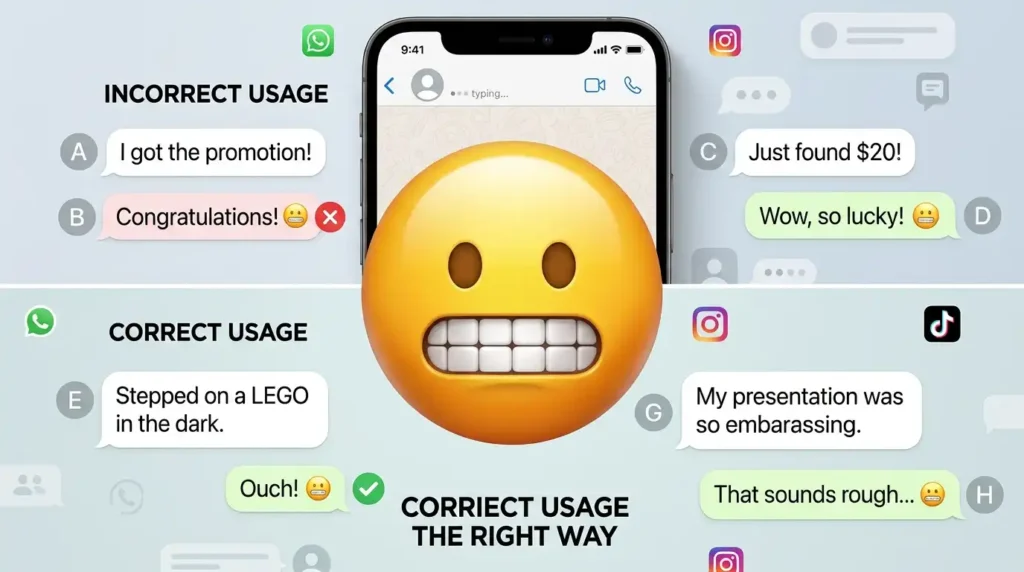
The grimace face emoji 😬 works best when your words already give some context. It is especially useful when you want to show an uncomfortable reaction without sounding too serious.
On WhatsApp, 😬 is common in personal chats, especially when someone makes an awkward mistake or shares uncomfortable news.
For example:
- “I accidentally sent that message to the wrong person 😬”
- “You have to tell Mom yourself 😬”
- “I completely forgot about it 😬”
It can also make an apology feel lighter when the situation is minor.
Instagram emojis can add emotion to captions, comments, and Stories. 😬 works well for awkward photos, funny mistakes, uncomfortable situations, or relatable posts.
Examples:
- “When you see your old school photo 😬”
- “That moment when your joke gets no reaction 😬”
- “Me pretending everything is normal 😬”
TikTok
On TikTok, 😬 can work as a quick reaction to awkward humor, unexpected moments, or situations where viewers know something has gone wrong.
It is often useful in short comments because one emoji can communicate a reaction without needing a full sentence.
Dos
- Use 😬 when the situation feels awkward or uncomfortable.
- Add words when the meaning could be unclear.
- Use it with friends when the tone is casual.
- Let the surrounding message explain the emotion.
- Use a related emoji when you need a more specific reaction.
Don’ts
- Do not assume 😬 always means anger.
- Do not use it for serious situations without clear context.
- Do not fill every message with emojis.
- Do not assume everyone reads the same emoji in exactly the same way.
- Avoid using it when a simple, direct message would be clearer.
Best grimace face emoji combos copy & paste
Romantic
👉 😬❤️ Awkward but affectionate moment
👉 😳😬❤️ Shy and nervous romantic feeling
👉 😬❤️ Nervous about admitting feelings
Cute
👉 😬 Shy and awkward moment
👉 😅😬 Laughing through an awkward situation
👉 🙃😬 Cute, playful awkwardness
Flirty
👉 😳😬 Feeling shy after a bold message
👉 😳😬 Very shy reaction
👉 😬🙃 Playful “what did I just say?” feeling
Missing someone
👉 😬 Missing someone while trying to stay composed
👉 Shy emotional reaction
👉 😅 Trying to smile through the feeling
Good night
👉 😬 Awkwardly emotional good-night mood
👉 😬 Shy good-night message
👉 🙃😬 Playful good-night reaction
Trending grimace face emoji in 2026
The grimace face emoji 😬 remains useful because awkward and relatable reactions are easy to understand in short-form online communication. It is especially natural when people want to react without writing a long explanation.
😬 is commonly seen in casual messages, comments, memes, and reaction-based social content. Its value comes from how quickly it communicates discomfort or nervousness.
😅 is often used when people want to show that a stressful or embarrassing moment has a lighter side.
fits newer styles of online expression where people show shyness, curiosity, or “I cannot look, but I am looking” reactions.
is also useful for exaggerated reactions to awkward, overwhelming, or embarrassing situations.
| Emoji | Why trending | Who uses it | Platform |
|---|---|---|---|
| 😬 | Quick awkward reaction | General users | WhatsApp, Instagram, TikTok |
| 😅 | Nervous humor | General users | WhatsApp, TikTok |
| Shy curiosity | Social media users | Instagram, TikTok | |
| Overwhelmed reaction | General users | Instagram, TikTok |
Emoji communication keeps becoming more flexible, with familiar faces often taking on slightly different tones depending on the conversation and platform.
FAQs:
1. What is the most popular grimace face emoji?
The main grimace face emoji is 😬. It is commonly used to express awkwardness, nervousness, embarrassment, or an uncomfortable reaction.
2. What does 😬 mean from a girl or boy?
The meaning does not depend on whether the sender is a girl or boy. Context matters more, and 😬 can mean nervousness, awkwardness, embarrassment, or discomfort.
3. Why do emojis look different on iPhone vs Android?
Apple, Google, and other platforms design their own emoji artwork. The basic Unicode meaning stays the same, but the facial expression and visual style can look slightly different.
4. Are grimace face emojis used differently in other countries?
The basic meaning of 😬 is widely understood, but humor and social context can vary between cultures. Always consider the words around the emoji before interpreting it.
Conclusion:
The grimace face emoji 😬 is useful for awkward, nervous, embarrassing, and uncomfortable moments.
Use it naturally, and let the surrounding message give it the right context.
For chats and social media, a simple emoji can make your reaction feel clearer and more relatable.

Liam Foster writes about emoji meanings, digital communication, and online trends. He enjoys explaining how emojis are used in everyday conversations and social media.