

A playful emoji can change the whole mood of a message. You may see the tongue face emoji in a text and wonder, “Is this just a joke, or does it mean something more?” The answer depends on the emoji, the words around it, and your relationship with the person sending it.
Tongue-related emojis are often used to show silliness, teasing, joking, excitement, or a playful mood. Some can also feel flirty when used between people who already have that kind of conversation.
In this guide, you will learn the main tongue face emoji meanings, how people use them on WhatsApp, Instagram, and TikTok, and which combinations you can copy right away.
Tongue emojis turn an ordinary message into something playful, cheeky, and full of personality.
What do tongue face emoji mean?
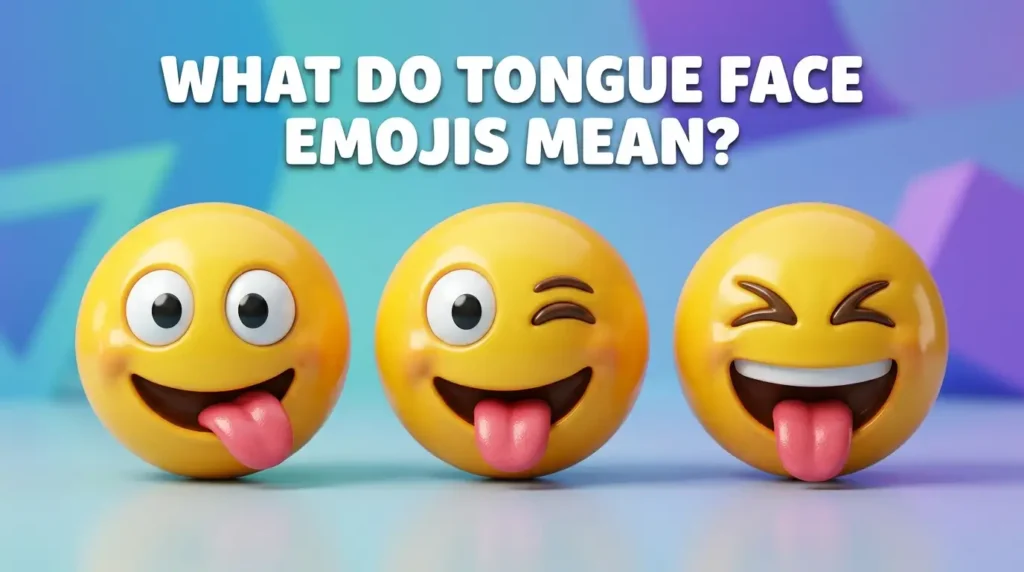
The tongue face emoji usually shows a playful or silly mood. The exact meaning changes with the face you choose.
- 😛 usually means playful teasing, silliness, or “I’m only joking.” It can soften a cheeky comment.
- 😜 adds a stronger sense of teasing or joking. The wink can make the message feel more mischievous.
- 😝 often shows exaggerated silliness, excitement, or a joking reaction. It can make a message feel extra playful.
- 😋 is commonly connected with enjoying something, especially tasty food. In some conversations, it can also create a cheeky tone.
- 🤪 gives a wild, goofy, or chaotic feeling. It works well when something is extremely funny or ridiculous.
- 👅 is the tongue symbol itself. It can be used for jokes, playful reactions, or references to the tongue without using a full facial expression.
| Emoji | Core meaning | Misread as | Best used when |
| 😛 | Playful teasing | Rude or childish | Jokes and friendly teasing |
| 😜 | Cheeky joke | Too flirty | Playful conversations |
| 😝 | Silly exaggeration | Mocking | Funny reactions |
| 😋 | Enjoyment | Suggestive | Food and playful messages |
| 🤪 | Goofy mood | Strange or chaotic | Humor and reactions |
| 👅 | Playful tongue | Suggestive | Simple playful references |
❤️ Red Heart
Meaning: Warm affection and emotional connection.
Example 1: You always make me smile ❤️
Example 2: Sending you some love ❤️
😛 Tongue Face
Meaning: Playfulness, teasing, or a silly joke.
Example 1: I was only joking 😛
Example 2: You really believed me 😛
😜 Winking Tongue Face
Meaning: Cheeky teasing, joking, or mischievous humor.
Example 1: You know what I mean 😜
Example 2: Okay, okay, I was teasing 😜
😝 Squinting Tongue Face
Meaning: Strong silliness, excitement, or exaggerated humor.
Example 1: That was so funny 😝
Example 2: I cannot stop laughing 😝
😋 Yummy Face
Meaning: Enjoyment, especially when something looks or tastes good.
Example 1: This looks amazing 😋
Example 2: That dessert was perfect 😋
🤪 Zany Face
Meaning: Goofy, wild, or intentionally ridiculous energy.
Example 1: What am I even doing 🤪
👅 Tongue
Meaning: A simple playful tongue gesture or reference.
Example 1: Just being silly 👅
Example 2: Guess what 👅
😉 Winking Face
Meaning: A playful hint, joke, or friendly tease.
Example 1: You know the secret 😉
Example 2: I might have a surprise 😉
😂 Face with Tears of Joy
Meaning: Strong amusement or laughter.
Example 1: That message got me 😂
Example 2: I cannot believe you said that 😂
🤭 Face with Hand Over Mouth
Meaning: A shy, amused, or slightly embarrassed reaction.
Example 1: Oops, did I say that? 🤭
Example 2: I probably should not laugh 🤭
How to use tongue face emoji the right way
On WhatsApp, tongue-related emojis work well in casual conversations. Friends often use them after a joke, playful challenge, or teasing comment.
With family, keep the meaning simple and friendly. In romantic conversations, the same emoji can feel more playful or flirty when the surrounding conversation already has that tone.
For example: “You actually fell for it 😛” clearly sounds like friendly teasing.
On Instagram, these emojis can add personality to captions, comments, and Stories. A creator might use them after a funny statement or playful caption.
They can also make a short comment feel warmer. Context matters because a single emoji can sound different depending on the post and the relationship between users.
TikTok
TikTok often uses emojis as quick reactions. A tongue face can support humor, irony, teasing, or an exaggerated reaction to a video.
The playful style works especially well when the caption is short. Instead of explaining a joke, one small emoji can help show the intended mood.
Dos
- Use 😛 or 😜 when you are clearly joking or teasing.
- Match the emoji to the tone of the conversation.
- Use a simple emoji when the meaning could otherwise be unclear.
- Consider your relationship with the person before using a playful or flirty combination.
- Keep emoji combinations short when the message itself is important.
Don’ts
- Do not assume every tongue emoji is romantic.
- Do not use a playful emoji to make a serious message sound unclear.
- Do not send a large chain of emojis when one or two are enough.
- Avoid using suggestive-looking combinations with people you do not know well.
- Do not depend on emojis alone when the message needs a clear explanation.
Best tongue face emoji combos copy & paste
Romantic
👉 😛❤️ Playful affection in a casual romantic message.
👉 😜❤️ A cheeky romantic tease.
👉 😋❤️ Enjoying a sweet moment together.
Cute
👉 😛😂 A silly joke between friends.
👉 😋❤️🤭 A cute, happy reaction.
👉 😝😂 Extra-silly laughter.
Flirty
👉 😜😉 A playful hint or cheeky tease.
👉 😛😉❤️ Lighthearted flirting with someone you already know well.
👉 🤪😜 Goofy, mischievous energy.
Missing someone
👉 ❤️😛 Missing someone while keeping the mood playful.
👉 🤭❤️ A shy, affectionate reaction.
👉 😜❤️ A playful way to show you are thinking about someone.
Good night
👉 😛❤️ A playful good-night mood.
👉 😜😉 A cheeky sign-off before bed.
👉 😋❤️ A warm and playful ending to the conversation.
Trending tongue face emoji in 2026
Tongue-related emojis remain useful because they add emotion without requiring a long explanation. In 2026, playful faces are commonly seen in casual chats, comments, short-form content, and reaction-style posts.
😛 is widely recognized and works well when someone wants to show that a statement is not completely serious. It is common in everyday messaging and friendly conversations.
😜 is often used when teasing has a mischievous edge. The wink makes the tone more obvious, so it frequently appears in casual social messages and comments.
😋 remains especially common around food and enjoyment. It can appear in food posts, stories, messages about meals, and casual reactions.
🤪 fits internet humor because it communicates exaggerated, goofy energy. It is often seen in memes, TikTok-style reactions, and informal conversations.
| Emoji | Why trending | Who uses it | Platform |
| 😛 | Simple playful tone | Casual users | WhatsApp, Instagram |
| 😜 | Cheeky teasing | Friends and creators | WhatsApp, TikTok |
| 😋 | Enjoyment and food | Food lovers and casual users | Instagram, WhatsApp |
| 🤪 | Goofy internet humor | Social media users | TikTok, Instagram |
Emoji communication continues to evolve as people use small visual reactions to express tone, humor, and personality in fewer words.
FAQs:
1. What is the most popular tongue face emoji?
😛 is one of the clearest and most recognizable choices for a playful tongue-out reaction. It usually works well for jokes, teasing, and silly messages.
2. What does 😜 mean from a girl or boy?
The meaning does not depend on gender. 😜 usually shows teasing, joking, or a mischievous mood, but the surrounding conversation determines whether it feels friendly or flirty.
3. Why do emojis look different on iPhone vs Android?
Different operating systems and apps use their own emoji artwork. The basic Unicode meaning stays similar, but the face, colors, and details can look slightly different.
4. Are tongue face emoji used differently in other countries?
Yes, context and communication habits can vary between cultures. A playful emoji may feel more casual in one conversation and more suggestive or unusual in another, so context is important.
Conclusion:
Tongue face emojis are useful when you want a message to sound playful, silly, or teasing. The best choice depends on your words, relationship, and situation. Use them naturally, keep the context clear, and choose combinations that match the mood.

Mason Reed is a digital language specialist who explores emojis, symbols, slang, and modern online expressions used in everyday conversations.